
Manufacturing equipment
Generator finance from 48+ Australian lenders.
A generator is either your power supply or your insurance policy against losing one. We fund the set, the switchgear and the install together.
 340 client reviews


One broker from your first call through to funding.
See which generator finance options fit your business.
Tell us what you are buying. A Lyft Money broker compares 48+ lenders and explains the rate, balloon, fees and total cost before you decide.
Access to 21+ generator finance lenders
Lenders on our panel that fund generator finance.





















At a glance
Generator finance: the numbers that matter.
- Typical price
- $8,000 – $400,000
- Terms
- Up to 72 months
- Indicative rates
- 6.9% – 14.5% p.a.
- Typical speed
- 24–48 hours for low-doc up to $150k; longer for full-doc
- Usual structure
- Chattel mortgage
- Useful life
- About 20 years
In plain English
What is generator finance?
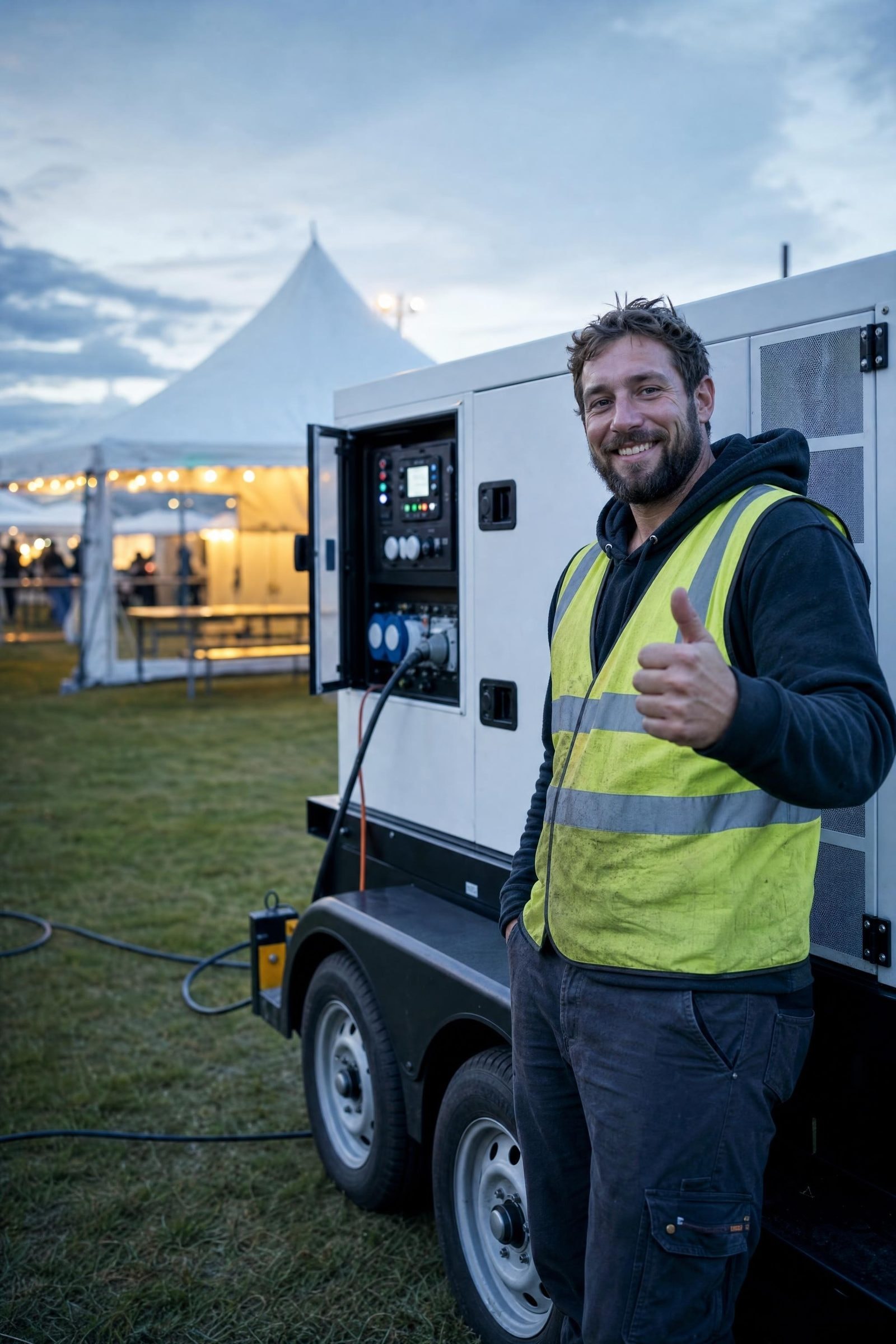
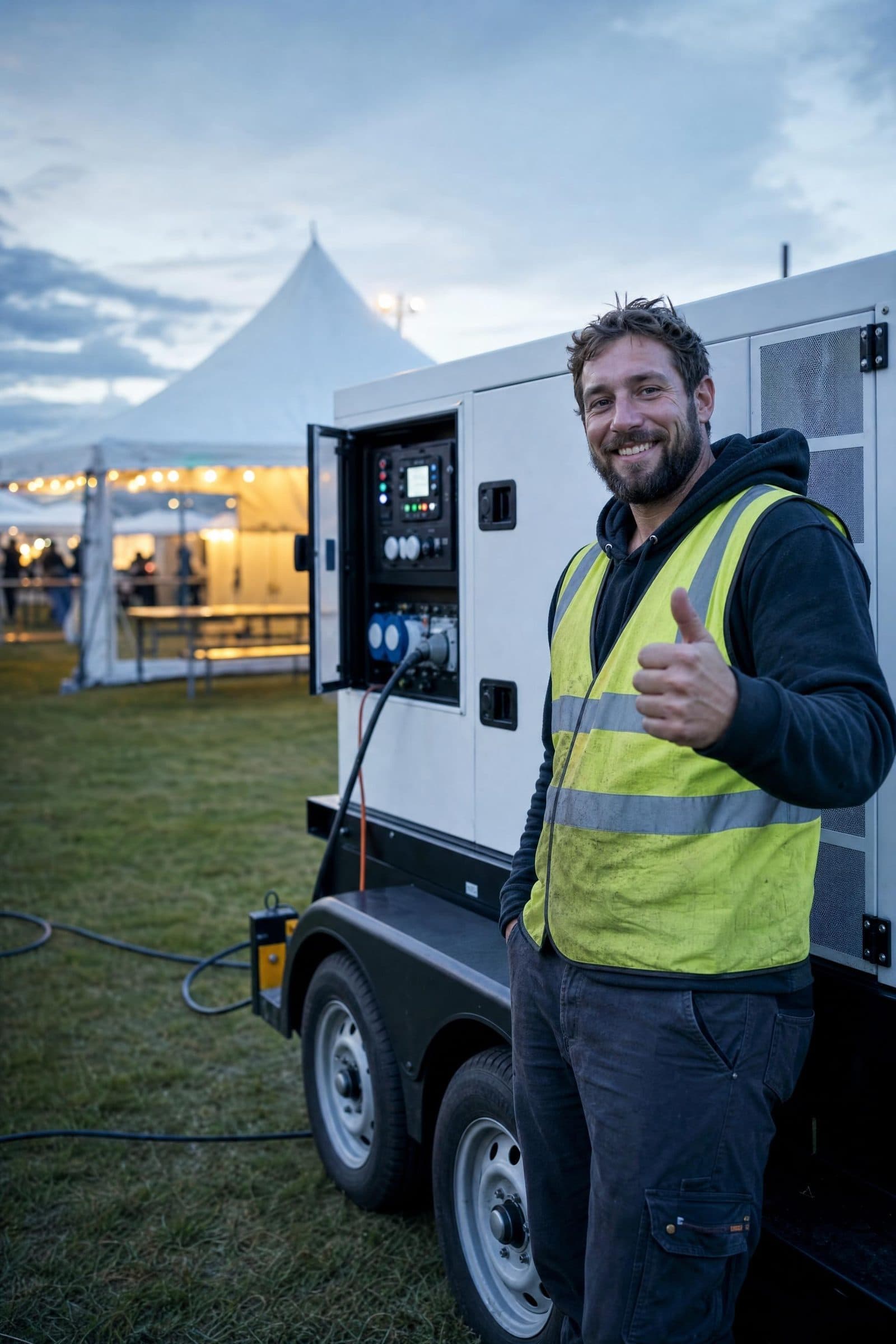
Generator finance is funding for a diesel or gas generator set, whether portable, trailer-mounted or a fixed standby unit, secured against the equipment. Generators are financed across Australian construction, events, mining services and healthcare, and installation of a standby set can usually be included in the funding.
Generators serve two very different purposes. On construction sites, in events and in remote work, they are the primary power supply and run constantly, so fuel efficiency and reliability drive the choice. In medical practices, aged care, data rooms and food storage, they are standby units that sit idle for years and must start on demand, so testing, servicing and the transfer switch matter more than efficiency.
Both are financeable. A trailer-mounted or skid-mounted set is simple movable equipment. A fixed standby installation includes switchgear, cabling, a fuel tank and often a concrete plinth, and the fixed portions may need to sit under a secured business loan rather than equipment finance. Your broker will look at the quote and tell you which parts each lender will fund.
How lenders assess generator finance
Generators are straightforward equipment security with long lives and low hours relative to age, so lenders will often accept older sets. Valuation looks at engine and alternator brand, run hours and whether the set is silenced and trailer-mounted. Fixed standby installations involve switchgear, cabling and civil works, which may need to be split between equipment finance and a secured business loan. Small portable units can fall below minimum funding amounts and are often bundled with other equipment on one contract.
New or used
Used and ex-hire generator sets are plentiful and cheap given low running hours; new sets suit standby installations where warranty and emissions compliance matter.
Before you buy
- Size the set for starting load, not just running load; motors and compressors draw far more on start-up.
- Ask for run hours and the load bank or service records — a generator that has idled for years can be in worse shape than one that has worked.
- For standby installations, confirm the automatic transfer switch and fuel storage are included in the quote.
Commonly financed
- Caterpillar C15 and C18 gensets
- Cummins C275 D5
- Atlas Copco QAS mobile generators
- Kohler-SDMO standby sets
- Kubota Lowboy portable generators


A clear next step
How to finance a generator.
Our AI helps check lender fit across 48+ lenders. Your broker reviews the options and explains what they mean for you.
- 01
Confirm the asset
Dealer or private sale, new or used, price and age of the asset.
- 02
Structure the loan
Term, deposit and balloon matched to cash flow and asset life.
- 03
Settle and collect
Lender pays the supplier directly; you take delivery.
- ID and ABN
- Invoice or quote for the asset
- Bank statements or financials depending on amount
The lender makes the final credit decision. Available options depend on your business and the lender’s assessment.
Before you make a decision
Estimate your generator repayments.
Adjust the price, rate, term and balloon to see the repayment and the total cost over the term.
- Number of repayments
- 60
- Balloon at end of term
- $40,800
- Total interest (est.)
- $57,747
- Total repaid (est.)
- $261,747
This calculator is a guide only. It uses simplified assumptions, excludes fees and charges unless stated, and is not an offer or quote. Actual repayments are confirmed by the lender in its loan contract.
From Lyft Money clients
Clear advice.
People who stay in touch.
Rated 5.0 from 340 Google reviews across the types of finance we arrange. Read them on Google.
“keeping us informed every step of the way”
“He explained all the financing options clearly”
“helped out my business”
Ways to finance a generator
Key terms
What is generator finance?
Generator finance is a secured loan or lease used to buy a diesel or gas generator set, with the equipment as security. Terms usually run 36 to 72 months, and installation for a fixed standby set can often be included with the right documentation.
Prime or standby generator?
A prime-rated generator is built to run as a continuous power source and is rated for long operating hours. A standby-rated generator is designed to run only during mains failure and carries a lower continuous rating. Choosing the wrong rating shortens the set’s life considerably.
Can I finance a generator for a hire fleet?
Yes. Generators are a staple of equipment hire, and lenders finance fleets through a master facility or a series of contracts at fleet pricing, supported by hire income and utilisation data. Trailer-mounted, containerised and silenced sets are all accepted.
Can standby generators for a building or data room be financed?
Yes. Fixed standby generators, automatic transfer switches, fuel systems and installation are financed as equipment even though they are installed, with terms up to seven years given their long lives. Some lenders treat fixed generators as a fit-out loan instead; your broker chooses the structure with the best rate.
Can I finance a used generator?
Yes. Used generators are financed on hours, brand, service history and load testing, with lenders relaxed about age because quality sets last for decades. Ex-hire and ex-mining sets are common and acceptable with records. Private and auction purchases need a PPSR clearance and inspection.
What is the minimum amount for generator finance?
Several lenders finance equipment from around $5,000 to $10,000, so most trade and event generators qualify on their own. Smaller portable sets are better bought on a line of credit or bundled with other equipment because fixed fees make a very small loan expensive. Your broker will tell you which is cheaper.
Do I need a deposit for equipment finance?
Often no deposit is required, particularly for established businesses buying standard assets from a dealer. A deposit is more likely where the business is new, the asset is older or specialised, the credit profile is weaker, or the amount is large relative to turnover. Deposits typically range from around 10% to 30% in those cases. Putting money in reduces the amount financed and can improve the terms offered, but it is not always necessary.
What fees are normally charged on equipment finance?
The common ones are an establishment or documentation fee charged at settlement, a monthly account-keeping fee, and a PPSR registration fee for recording the lender's interest in the asset. A brokerage fee may also apply, which we disclose to you in writing before anything is submitted. Some agreements include an early termination or break cost. Fees vary by lender and are typically a modest part of total cost compared with the interest, but they should still be compared.
How large a balloon can I set?
Lenders publish maximum residual or balloon percentages that fall as the term lengthens, because the asset is worth less at the end of a longer term. For a vehicle, a common pattern is up to roughly 50% on a two-year term, reducing to around 20% to 30% on a five-year term. The ATO also sets minimum residual values for finance leases. A larger balloon lowers monthly repayments but increases total interest and leaves a lump sum to deal with at the end.
Is hire purchase still used in Australia?
It is far less common than it once was. Under hire purchase the financier owns the asset and you hire it, with ownership transferring automatically after the final instalment. Since the GST changes that made chattel mortgage more attractive for businesses accounting on a cash basis, most equipment lending is written as a chattel mortgage or lease instead. Some lenders still offer commercial hire purchase, and your accountant can advise whether it suits your circumstances.
What is PPSR registration and why does the lender do it?
The Personal Property Securities Register is the national register of security interests in personal property, including vehicles and equipment. When a lender finances an asset, it registers its interest so the security is publicly recorded and its priority is protected if the asset is sold or the business fails. It also means a buyer searching the register will see the finance. The registration is released once the contract is paid out, and a small registration fee is usually passed on to you.
How does a balloon payment work on a chattel mortgage?
A balloon is a lump sum left to pay at the end of a chattel mortgage, which lowers the regular repayments during the term. For example, a 30 per cent balloon on a $100,000 vehicle leaves $30,000 to pay at the end, so the monthly amount is calculated on $70,000 plus interest on the full balance. Balloons are commonly set between 0 and 40 per cent depending on the asset and term, and at the end you can pay it out, refinance it or sell the asset to clear it. A balloon reduces monthly cost but increases total interest, so your broker shows both figures side by side.
Your business. Your decision.
See your options.
Know the costs.
Decide with confidence.
One broker to explain it. Clear numbers before you proceed.
No obligation to proceed.