

Business situation
Finance for business loans with bad credit, shaped around how you get paid.
A default on file narrows your options and raises the price. It does not automatically end the conversation, and no broker can promise you an approval.
 340 client reviews


One broker from your first call through to funding.
See which options fit your situation.
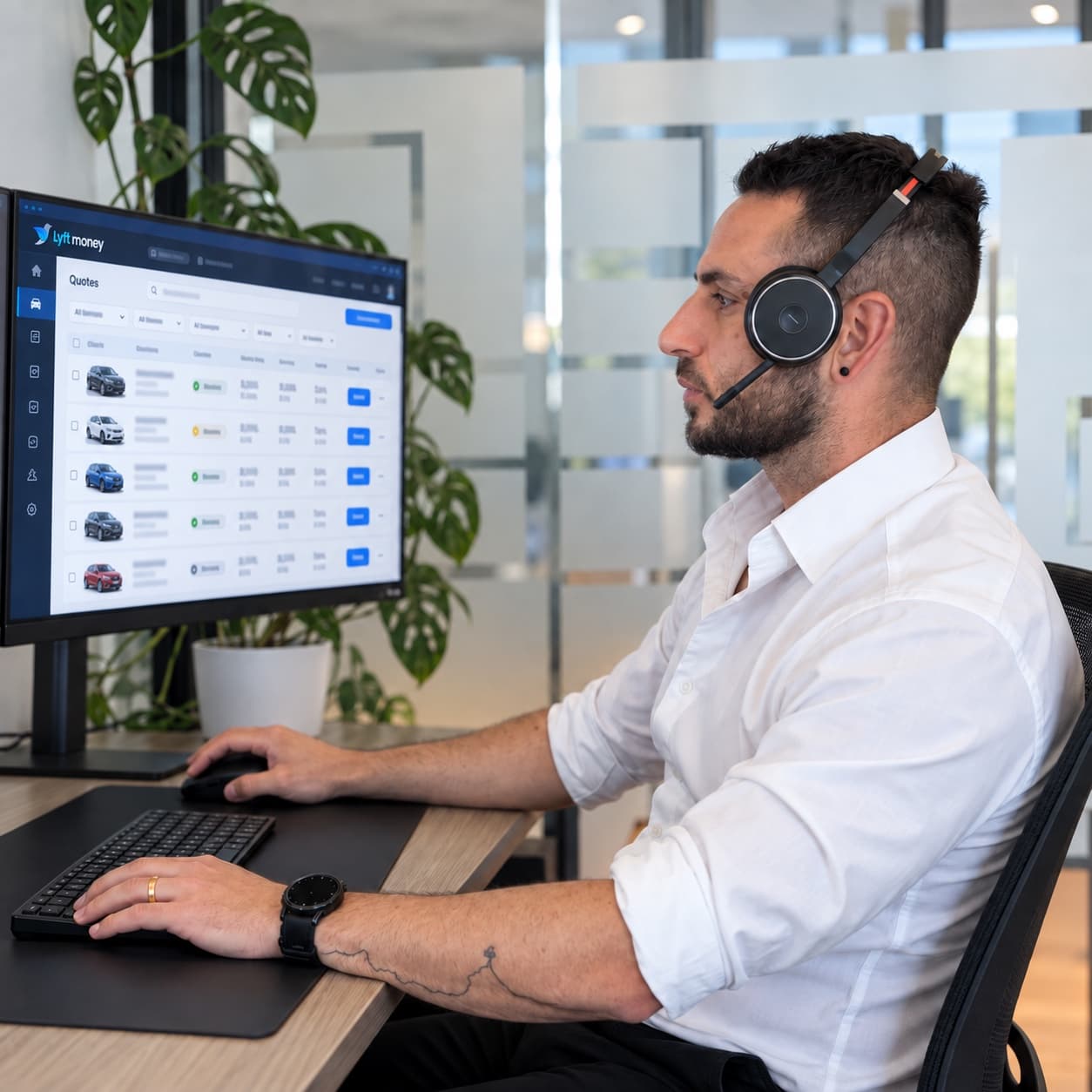
Tell us what you need. A Lyft Money broker who knows business loans with bad credit compares 48+ lenders and explains the rate, fees and repayments before you decide.
Access to 31+ business loans with bad credit lenders
Lenders on our panel that fund business loans with bad credit.






























At a glance
Business loans with bad credit: the numbers that matter.
- Typical amounts
- $5,000 – $5,000,000
- Typical speed
- Same day to 48 hours for low-doc
- Indicative rates
- 6.9% – 16% p.a.
- Finance options
- 5 structures compared
- Lenders active here
- 3+ on our panel
In plain English
Finance for business loans with bad credit: how it works.
Bad credit business finance is lending to businesses with defaults, judgments or a past insolvency on file, offered by a smaller group of lenders that price for the additional risk and usually require security or a strong recent trading record.
Australian business lenders take a range of positions on adverse credit. Banks and the cheaper non-bank lenders will generally decline where there are unpaid defaults, recent judgments or a prior insolvency involving the directors. A smaller group of specialist and fintech lenders will consider these files, weighing how old the adverse event is, whether it has been paid, the amount involved, and what the business has done since. Asset finance is usually more accessible than unsecured lending, because the security gives the lender a recovery path.
What genuinely helps is evidence. Defaults that have been paid and marked as such, twelve months of clean recent banking with no dishonours, an ATO arrangement being met on time, and an asset to secure against all move a file from impossible to possible. What does not help is applying to lender after lender: each application leaves an enquiry on your credit file, and a cluster of enquiries reads as distress. A broker’s value here is knowing which lenders will look before an application is submitted, rather than finding out afterwards.
The cash-flow pattern we plan around
Often recovering trade following a period of stress, where recent banking looks materially better than the historical accounts or the credit file suggest.
What business loans with bad credit typically fund
- Refinancing high-cost short-term debt
- A vehicle or equipment to keep working
- Clearing an ATO or supplier arrangement
- Working capital while trade recovers
Documents lenders usually ask for
- ABN and a current copy of your credit file
- 6–12 months of bank statements showing recent trading
- Evidence any defaults are paid, plus details of the asset offered as security


A clear next step
How to get finance for business loans with bad credit.
Our AI helps check lender fit across 48+ lenders. Your broker reviews the options and explains what they mean for you.
- 01
Asset and supplier details
Quote or invoice, asset age and condition.
- 02
Match the lender
Specialist vs bank, low-doc vs full-doc.
- 03
Settle
Funds paid to the supplier; you take delivery.
The lender makes the final credit decision. Available options depend on your business and the lender’s assessment.
Before you make a decision
Estimate equipment loan repayments.
Know what lands and what leaves. Adjust the amount, rate and term to see the repayment and total cost.
- Number of repayments
- 48
- Total interest (est.)
- $15,443
- Total repaid (est.)
- $90,443
This calculator is a guide only. It uses simplified assumptions, excludes fees and charges unless stated, and is not an offer or quote. Actual repayments are confirmed by the lender in its loan contract.
From Lyft Money clients
Clear advice.
People who stay in touch.
Rated 5.0 from 340 Google reviews across the types of finance we arrange. Read them on Google.
“keeping us informed every step of the way”
“He explained all the financing options clearly”
“helped out my business”
Finance options for business loans with bad credit
Equipment loan
Where a credit file shows adverse listings, an asset changes the conversation because the lender has something to recover. Several lenders on our panel will fund equipment for a business with paid defaults, particularly where the machine is mainstream, saleable and central to how the business earns.
Chattel mortgage
A chattel mortgage over a vehicle or machine gives your business ownership from day one and gives the lender registered security on the PPSR. That security is often what makes an approval possible where credit history is impaired.
Secured business loan
Where you or the business own property, a secured business loan is usually the best available option after adverse credit. Real property security allows a lender to look past a credit file that would otherwise stop the application, and the pricing is far better than any unsecured alternative.
Low-doc business loan
A low-doc facility assesses recent bank statements rather than historical financials, which suits a business whose trading has recovered but whose last set of accounts reflects the bad period. Lenders in this space will consider paid defaults and older adverse events.
Business debt consolidation loan
Businesses with impaired credit frequently end up with several short-term facilities taken at different times, each with daily or weekly repayments, and the combined outflow becomes the real problem. Consolidating into one facility over a longer term can restore breathing room.
Lenders active in this space
Bizcap, Capify, Pepper Money — among others on our panel of 48+. Your broker checks fit before anything is submitted.
Key terms
Adverse credit business lending
Adverse credit business lending is finance offered to businesses whose credit file shows defaults, judgments or prior insolvency, provided by specialist lenders who assess recent trading and available security rather than the credit score alone.
Paid default
A paid default is a listed default that has since been settled and marked as paid on the credit file, which remains visible for five years but is viewed considerably more favourably by lenders than an unpaid listing.
Straight answers
Questions from business loans with bad credit.
Have a question?
Talk to us: 1800 005 938Can I get business finance with defaults on my credit file?
Often, yes. A smaller group of lenders finances businesses with paid or unpaid defaults, judgments or a past insolvency, usually with security such as equipment or property, a strong recent trading record and a higher rate. The lender choice matters, so a broker who knows which lenders accept which credit events saves declined applications that damage the file further.
How much more does bad credit finance cost?
Rates are higher than mainstream lending, and the gap depends on the severity and age of the credit events and whether security is offered. Secured equipment or property finance is much cheaper than unsecured bad credit loans. Many businesses use a bad credit facility for a year or two and refinance to sharper terms once the file has improved.
Can I consolidate debts to rebuild my credit position?
Yes. A debt consolidation loan secured against equipment or property rolls several expensive facilities into one repayment, which lowers the monthly outgoing and, paid on time, rebuilds the credit history. Lenders assess the security’s equity and recent trading rather than the historical file alone.
Will applying hurt my credit file further?
Every application a lender runs is recorded, and several declines in a short period hurt. A broker checks your file first, matches you to lenders that accept your credit events, and submits once, so the enquiry count stays low. Some lenders offer a soft check for the initial assessment.
Do I need a deposit for equipment finance?
Often no deposit is required, particularly for established businesses buying standard assets from a dealer. A deposit is more likely where the business is new, the asset is older or specialised, the credit profile is weaker, or the amount is large relative to turnover. Deposits typically range from around 10% to 30% in those cases. Putting money in reduces the amount financed and can improve the terms offered, but it is not always necessary.
Can I finance equipment I already own to release cash?
Yes, that is a sale and leaseback. You sell an unencumbered asset to a financier and lease or finance it back, receiving the sale proceeds as working capital while keeping the asset in use. Lenders will want proof you own it outright, a valuation, and evidence the funds are for a legitimate business purpose. It is a useful option when capital is tied up in plant, but it converts an owned asset into a monthly commitment, so the cash flow effect needs checking first.
How long can I finance equipment for?
Terms usually run from 12 to 84 months. The ceiling is generally set by the expected working life of the asset: heavy earthmoving and trucks often stretch to five or seven years, while IT hardware and point-of-sale systems are commonly kept to two or three. Lenders also look at the age of the asset at the end of the term, so a ten-year-old machine will attract a shorter term than a new one. Longer terms lower repayments and raise total interest.
Can one facility cover several pieces of equipment?
Yes. A master facility agreement lets a lender approve an overall limit, then draw down individual assets against it using a commitment schedule for each one. Each drawdown has its own term and repayment, but you avoid re-applying every time you buy. It suits businesses buying regularly through the year. Limits are usually reviewed annually and the lender can decline a particular asset even where the limit is available.
How long does my ABN need to be active?
It varies by lender and product. Many unsecured business lenders want at least six to twelve months of trading, while some asset finance lenders will consider a new ABN where the director has industry experience, a clean credit file and often property ownership or a deposit. Registration for GST is frequently expected once turnover reaches the threshold. A short ABN history is not an automatic decline, but it narrows the panel and usually affects the rate and structure offered.
Do I have to own property to get business finance?
No. Plenty of finance is written for non-property owners, especially asset finance where the equipment itself is the security, and unsecured lending assessed on cash flow. That said, property ownership widens the panel and often improves pricing, because it gives a lender an additional avenue if things go wrong. If you do not own property, expect more weight on trading history, bank conduct and the quality of the asset being financed.

Your business. Your decision.
See your options.
Know the costs.
Decide with confidence.
One broker to explain it. Clear numbers before you proceed.
No obligation to proceed.