
Industry guide
Finance for plumbing businesses, shaped around how you get paid.
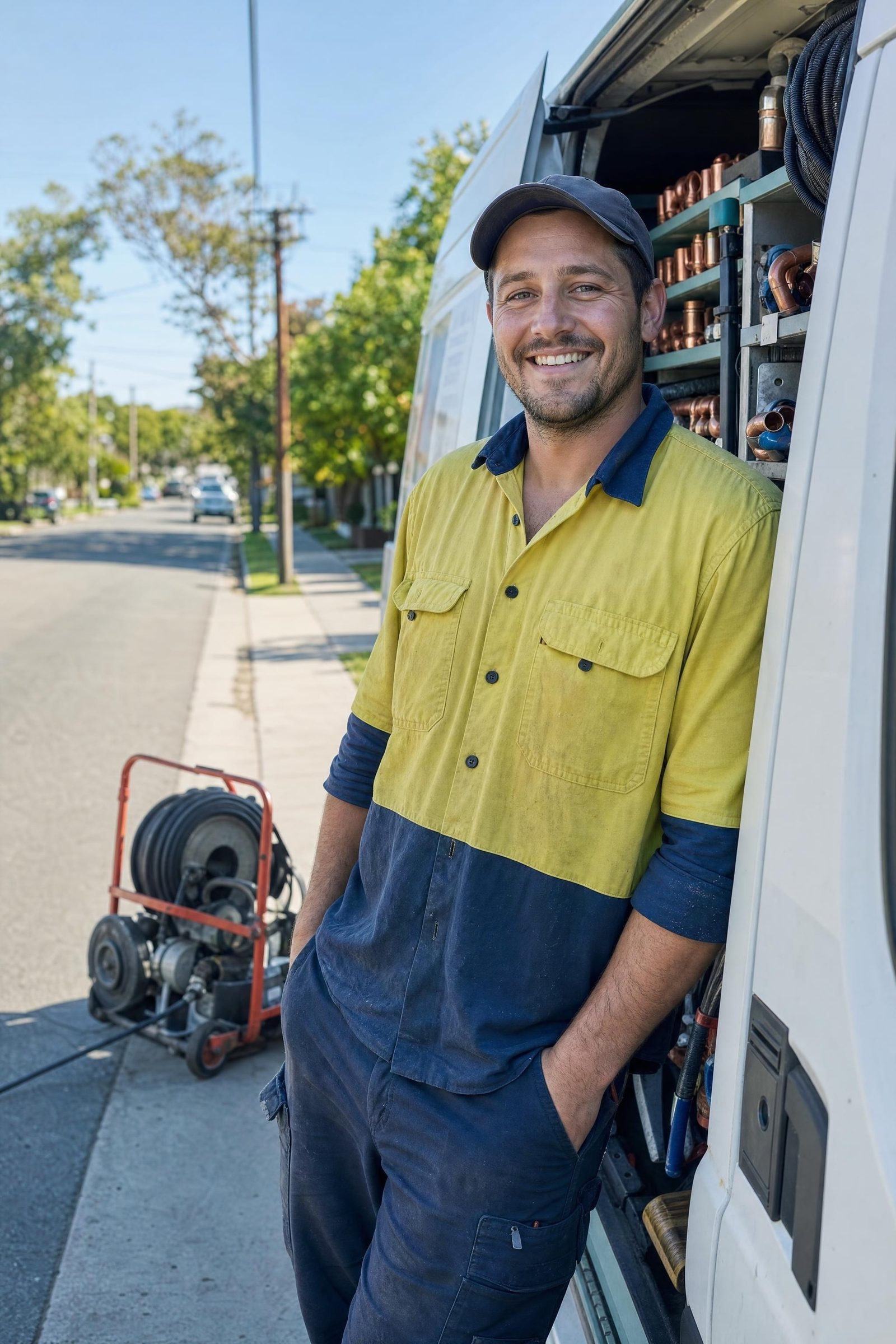
Plumbers carry materials on account and wait on builders and property managers to pay. The van and what is in it are the business.
 340 client reviews


One broker from your first call through to funding.
See which options fit your business.
Tell us what you need. A Lyft Money broker who knows plumbing businesses compares 48+ lenders and explains the rate, fees and repayments before you decide.
Access to 33+ plumbing businesses lenders
Lenders on our panel that fund plumbing businesses.

































At a glance
Plumbing businesses: the numbers that matter.
- Typical amounts
- $10,000 – $250,000
- Typical speed
- Same day to 48 hours for low-doc
- Indicative rates
- 6.8% – 15% p.a.
- Finance options
- 6 structures compared
- Lenders active here
- 4+ on our panel
- Assets we fund
- Van, Ute, Mini excavator and more
In plain English
Finance for plumbing businesses: how it works.
Plumbing finance is asset and cash-flow lending for plumbing contractors, funding fitted-out service vehicles, jetters and camera equipment, and the materials and wages carried between invoicing and payment.
A plumbing business splits roughly into two very different models. Service and maintenance work — blockages, hot water replacements, leaks — is paid quickly, often on the day, and needs vans, jetters and drain cameras. Construction plumbing on new residential or commercial jobs runs on progress claims with 30 to 45-day terms and retention held at the end, while copper, PVC, fittings and fixtures are bought on trade accounts due in 30 days. Contractors doing both are effectively running two cash-flow patterns at once.
Compliance and licensing add fixed costs that do not scale down in a quiet month: licences, insurance, backflow and gas accreditations, and vehicle compliance. Equipment is where the money goes beyond the van: high-pressure jetters, CCTV drain cameras and locators, pipe relining rigs, core drills and thread machines. Relining in particular has changed the economics of drain work, turning excavation jobs into same-day fixes at strong margins — but the rig is a significant purchase that has to be financed against realistic job volumes.
The cash-flow pattern we plan around
Fast payment on domestic service work alongside 30–45 day progress claims on construction jobs, with trade account materials due on 30-day terms regardless.
What plumbing businesses typically fund
- Fitted-out service vans and utes
- Jetters, drain cameras and locators
- Pipe relining equipment
- Materials and trade accounts between invoices
- Apprentice wages and licensing costs
Documents lenders usually ask for
- ABN and plumbing licence details
- 6 months of business bank statements
- Quote for the vehicle, fit-out or equipment



A clear next step
How to get finance for plumbing businesses.
Our AI helps check lender fit across 48+ lenders. Your broker reviews the options and explains what they mean for you.
- 01
Pick the vehicle
Dealer or private sale, new, demo or used, with the drive-away price and any accessories confirmed.
- 02
Set the structure
Your broker matches term, deposit and balloon to how long you will keep the vehicle and the kilometres it will do.
- 03
Settle and collect
The financier pays the dealer or seller directly and you take delivery.
The lender makes the final credit decision. Available options depend on your business and the lender’s assessment.
Before you make a decision
Estimate business vehicle finance repayments.
Know what lands and what leaves. Adjust the amount, rate and term to see the repayment and total cost.
- Number of repayments
- 48
- Total interest (est.)
- $13,904
- Total repaid (est.)
- $88,904
This calculator is a guide only. It uses simplified assumptions, excludes fees and charges unless stated, and is not an offer or quote. Actual repayments are confirmed by the lender in its loan contract.
From Lyft Money clients
Clear advice.
People who stay in touch.
Rated 5.0 from 340 Google reviews across the types of finance we arrange. Read them on Google.
“keeping us informed every step of the way”
“He explained all the financing options clearly”
“helped out my business”
Finance options for plumbing businesses
Business vehicle finance
A plumber’s van is a workshop, not a vehicle. Racking, shelving, a compartment for the jetter, water tanks, ladder racks and secure tool storage often add fifteen or twenty thousand dollars to the purchase, and that fit-out can be financed as part of the same asset rather than paid from cash.
Chattel mortgage
Chattel mortgage is the default structure for plumbing vehicles and larger equipment: you own the asset from settlement and, if registered for GST, generally claim the GST on the full purchase price in the next BAS rather than spreading it over payments. Interest and depreciation are deductible to the extent the asset is used in the business.
Equipment loan
High-pressure jetters, CCTV drain cameras and locators, pipe relining rigs, core drills and thread machines are all financeable against the equipment over two to five years. Relining gear in particular deserves proper structuring — it is expensive, it opens a genuinely higher-margin service, and the payback depends on how many relining jobs a month you can realistically win.
Unsecured business loan
Unsecured lending covers the timing problems: a big materials order for a job that pays on completion, an apprentice’s wages while their productivity builds, a quarterly BAS, or the gap while a builder sits on a progress claim. Funding is quick and documentation light, and it is priced above secured money because there is no asset behind it.
Business line of credit
A line of credit suits a plumbing business juggling several jobs at different stages. Draw to clear the trade account when the supplier statement lands, repay as clients pay, and keep the limit available for the next materials run.
Invoice finance
Plumbing subcontractors invoicing builders and commercial property managers can fund each invoice as it is raised rather than waiting out 45-day terms. This works best where the debtor book is commercial and reasonably concentrated in reliable payers; domestic service work paid on the day is not what invoice finance is for.
Assets we finance for plumbing businesses
Lenders active in this space
Angle Asset Finance, Pepper Money, Prospa, Metro Finance — among others on our panel of 48+. Your broker checks fit before anything is submitted.
Key terms
Plumbing equipment finance
Plumbing equipment finance is secured lending for the tools of the trade — jetters, CCTV drain cameras, relining rigs and vehicle fit-outs — usually written over two to five years against the equipment.
Trade account gap
The trade account gap is the period between a plumbing supplier’s 30-day account falling due and the client paying the invoice for the job those materials were used on.
Can a plumber finance a fitted-out van or ute with the fit-out included?
Yes. Racking, drawers, pipe tubes, roof racks, a canopy and signage can be financed with the vehicle when quoted together, so the whole working vehicle settles at one rate. Plumbers with two years of ABN history are usually approved on low documentation within a day.
Can jetters, cameras and locators be financed?
Yes. Jetting units, drain cameras, pipe locators, excavation equipment and trailers are financed as equipment over three to five years, and several items can be bundled into one contract. A jetter and camera set-up often pays for itself in a few months of drain work.
How do plumbers fund materials on construction jobs paid in arrears?
Invoice finance against progress claims and a line of credit cover trade account materials and wages while builders take 30 to 45 days, and domestic service income keeps day-to-day cash moving. A broker sizes the facility to your mix of service and construction work.
Can a plumber get finance without tax returns?
Yes. Plumbers with an ABN of two years or more and clean credit are commonly approved for vehicles and equipment on low documentation up to around $400,000, and unsecured loans are approved on six to twelve months of bank statements. Larger amounts use financials.
Can I finance a vehicle bought privately rather than from a dealer?
Yes, most asset lenders fund private sales, with extra checks. The lender will run a PPSR search to confirm no existing finance is registered against the vehicle, verify the seller's identity and bank details, and may require an inspection or valuation. Funds are paid to the seller after signing, not to you. Private sales usually settle a little slower than dealer purchases and there is no GST credit to claim unless the seller is registered and issues a tax invoice.
Is finance for electric vehicles different?
The finance structures are the same — chattel mortgage, lease or novated lease — but a few things change. Some lenders offer specific EV or low-emissions products, residual and balloon settings can be more conservative because resale values are still stabilising, and charging infrastructure can sometimes be financed alongside the vehicle. For employees, eligible electric vehicles under the luxury car tax threshold may attract an FBT exemption on a novated lease. Confirm current rules with your accountant.
How does fleet finance differ from financing one vehicle?
Fleet arrangements put several vehicles under one approved limit, so each new vehicle is drawn down against an existing facility rather than assessed from scratch. That saves time and gives consistent pricing across the fleet. Larger fleets can add maintenance, registration and fuel management into a single monthly cost. The trade-off is an annual review of the overall limit and, in some cases, tighter reporting requirements from the financier.
How is a personal car loan different from business vehicle finance?
A personal car loan is consumer credit regulated by the National Consumer Credit Protection Act. That brings responsible lending obligations on the lender and the broker, a requirement to quote a comparison rate, and access to consumer dispute resolution. Business vehicle finance for a genuine business purpose generally sits outside that regime and is assessed on the business rather than household budget. The security over the vehicle can look similar; the disclosure, protections and tax treatment do not.
How are funds paid to the seller at settlement?
The lender pays the supplier directly, not you. For a dealer purchase, the financier settles against the dealer's tax invoice once signed documents and any conditions are complete, and the dealer releases the asset. For a private sale, the funds go to the verified seller after the PPSR check and identity verification, and you sign a receipt confirming delivery. If you have already paid a deposit, that is shown on the invoice and reduces the amount financed.
I have just started my ABN — what can I realistically finance?
Asset finance is usually the most accessible starting point, because the equipment provides security. Lenders with start-up or new-ABN policies will typically consider a first vehicle, ute or machine where you have verifiable industry experience, a clean personal credit file, and often property ownership or a deposit of around 10% to 20%. Unsecured working capital is much harder in the first six to twelve months. As BAS and bank history build, the panel available to you widens.
Your business. Your decision.
See your options.
Know the costs.
Decide with confidence.
One broker to explain it. Clear numbers before you proceed.
No obligation to proceed.