
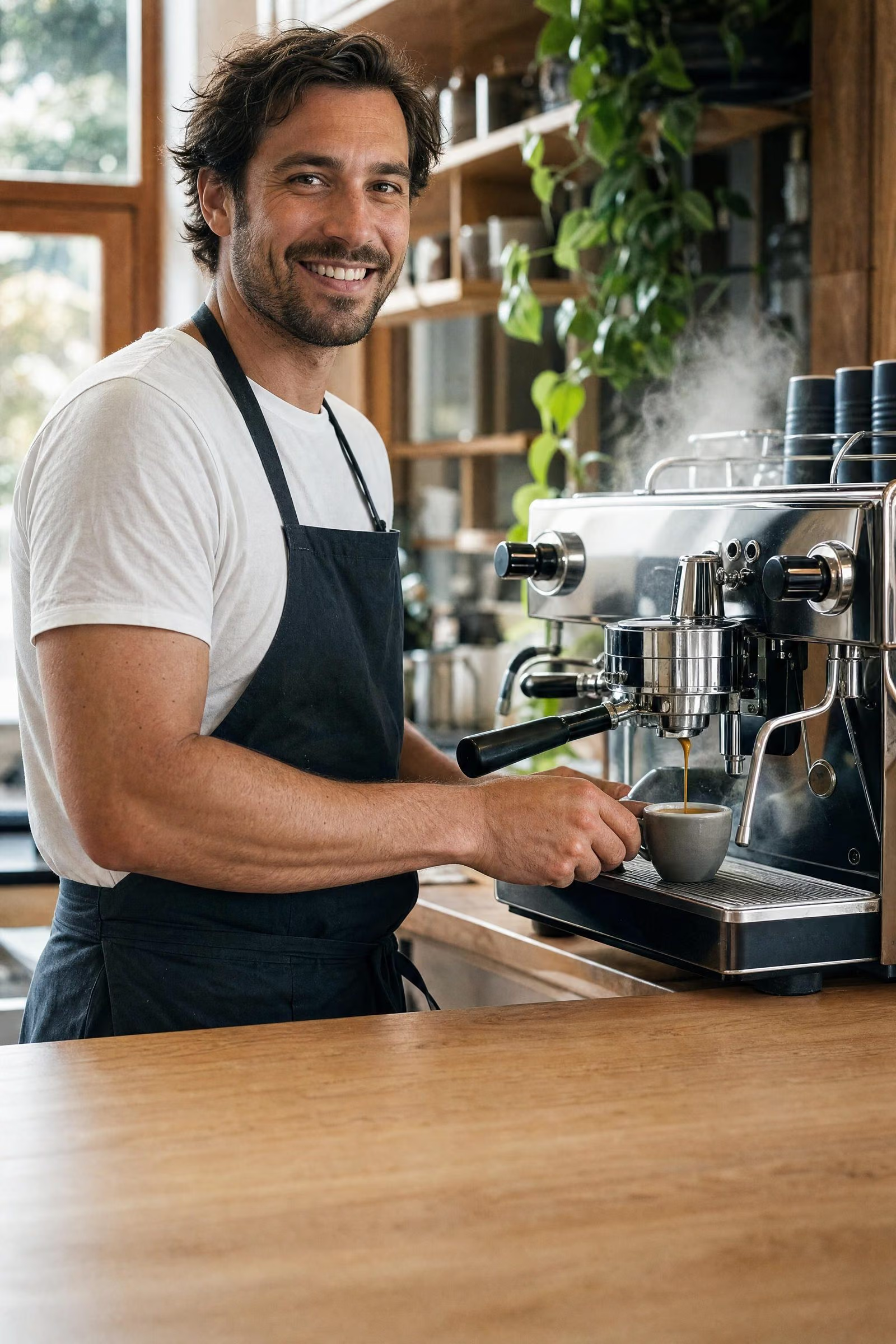
Hospitality and retail
Coffee machine finance from 48+ Australian lenders.
The espresso machine is the single most important asset in most cafes. We fund the machine, grinders and water treatment together so the bar is complete on day one.
 340 client reviews


One broker from your first call through to funding.
See which coffee machine finance options fit your business.
Tell us what you are buying. A Lyft Money broker compares 48+ lenders and explains the rate, balloon, fees and total cost before you decide.
Access to 31+ coffee machine finance lenders
Lenders on our panel that fund coffee machine finance.

























At a glance
Coffee machine finance: the numbers that matter.
- Typical price
- $8,000 – $35,000
- Terms
- Up to 60 months
- Indicative rates
- 9.5% – 22% p.a.
- Typical speed
- 3–10 business days
- Usual structure
- Fit-out finance
- Useful life
- About 10 years
In plain English
What is coffee machine finance?
Coffee machine finance is funding for a commercial espresso machine, grinders and water treatment, secured against the equipment. Australian cafes treat the espresso machine as core revenue equipment, and because price points are modest the finance is usually quick and requires little paperwork.
Australian cafe culture sets a high bar, and the espresso machine is where that shows. Group head count determines throughput, boiler capacity determines consistency through a rush, and grinder quality arguably matters as much as the machine itself. A three-group La Marzocco with good grinders is a serious investment, but for a cafe doing several hundred coffees a day it is the equipment that produces most of the revenue.
Financing is straightforward at this price point. The thing worth comparing carefully is the roaster machine deal. Many roasters will place a machine at no upfront cost in exchange for a coffee supply agreement at a set price per kilogram. That is convenient, but over five years the premium on the beans often exceeds what financing your own machine would have cost, and you have less freedom to change supplier.
How lenders assess coffee machine finance
Espresso machines sit at a price point where most lenders approve on light documentation for an established ABN, often within a day or two. Grinders, water filtration and installation should be on the same invoice to be funded together. Machines below a lender’s minimum funding amount are usually bundled with other kitchen equipment on one contract. Many roasters offer machine loan or rental arrangements tied to coffee supply — worth comparing against ownership, because the total cost over five years can be higher.
New or used
New machines carry warranty and installation support; refurbished machines from recognised brands are common in Australia and are financeable where a service history exists.
Before you buy
- Match group head count to your peak hour, not your daily average; a two-group machine will bottleneck a busy morning rush.
- Budget for water filtration — scale from untreated water is the fastest way to destroy a commercial machine.
- Compare a roaster’s machine loan deal against buying outright; the tied coffee price often makes the free machine expensive.
Commonly financed
- La Marzocco Linea PB and Linea Classic
- Synesso MVP Hydra
- Slayer Espresso
- Wega Concept and Polaris
- Mazzer and Mahlkönig grinders
A clear next step
How to finance a coffee machine.
Our AI helps check lender fit across 48+ lenders. Your broker reviews the options and explains what they mean for you.
- 01
Split the quote
Separate removable, serial-numbered equipment from fixed leasehold improvements across every supplier quote.
- 02
Structure the funding
Your broker funds the equipment as secured asset finance and the balance through the cheapest available unsecured option.
- 03
Draw against progress
Funds are released as builder and supplier invoices fall due through the build.
- Itemised builder and supplier quotes
- Signed premises lease showing term and options
- Bank statements, financials or projections for a new site
The lender makes the final credit decision. Available options depend on your business and the lender’s assessment.
Before you make a decision
Estimate your coffee machine repayments.
Adjust the price, rate, term and balloon to see the repayment and the total cost over the term.
- Number of repayments
- 60
- Balloon at end of term
- $4,400
- Total interest (est.)
- $10,436
- Total repaid (est.)
- $32,436
This calculator is a guide only. It uses simplified assumptions, excludes fees and charges unless stated, and is not an offer or quote. Actual repayments are confirmed by the lender in its loan contract.
From Lyft Money clients
Clear advice.
People who stay in touch.
Rated 5.0 from 340 Google reviews across the types of finance we arrange. Read them on Google.
“keeping us informed every step of the way”
“He explained all the financing options clearly”
“helped out my business”
Ways to finance a coffee machine
Key terms
What is coffee machine finance?
Coffee machine finance is a loan or lease used to buy a commercial espresso machine and grinders, with the equipment as security. Terms usually run 24 to 60 months and installation and water treatment can be included when quoted with the machine.
Is a roaster’s free machine cheaper than financing?
Not always. A roaster machine loan removes the upfront cost but ties you to a coffee supply agreement at a set price and volume. Over a five-year period the price premium on beans frequently exceeds the cost of financing your own machine, and you lose supplier flexibility.
Can I finance a commercial coffee machine and grinder together?
Yes. The espresso machine, grinders, water filtration, knock box, milk fridge and installation can go on one contract when quoted together, and most lenders finance café equipment from around $5,000. A complete coffee station on one contract is cheaper than several small loans or paying cash from working capital.
Can a new café finance a coffee machine?
Yes, with the right lender. New cafés are approved with a deposit, a signed lease, a clean personal credit file and hospitality experience, and rental agreements from equipment suppliers are another route for start-ups. Established cafés qualify on low documentation, often within a day.
Should I rent, lease or buy a coffee machine?
Buying on a chattel mortgage or equipment loan suits a café that will keep the machine for years and wants the GST and depreciation benefits. Rental suits start-ups and businesses that want servicing included and the option to upgrade, at a higher total cost. Roaster-supplied machines tied to a bean contract are a third option. Your broker compares all three.
What does a coffee machine cost to finance per week?
As a guide, a $18,000 two-group machine and grinder package over four years costs roughly $105 to $120 a week depending on the rate, which is a handful of coffees a day. Use the calculator on this page for your figures and your broker firms up the number with a real quote.
Can franchise finance include the fit-out and equipment?
Yes, and it is usually best arranged as a package. The fit-out is often funded by a business loan or fit-out finance, the equipment by a chattel mortgage or lease secured on the equipment itself, and the franchise fee and working capital by the main loan. Structuring it this way keeps each part on the cheapest available terms. Lyft Money arranges the parts together so settlement lines up with the franchisor’s opening timetable.
Can I finance equipment for a new practice?
Yes. Lenders regularly fund new practices for registered practitioners with a track record as an employee or associate, because the profession itself gives them confidence. A business plan, the lease on the premises and evidence of qualifications are the main requirements, and the fit-out, equipment and working capital can be funded together as a package so the practice opens fully equipped.
What does fit-out finance cover?
Fit-out finance funds the works needed to open or refurbish a site: joinery, counters and benches, flooring, lighting, partitions, plumbing and electrical, signage, air conditioning and the removable equipment such as kitchen gear, chairs, refrigeration and IT. Lenders treat the removable equipment and the fixed building works differently, so the two are usually funded on separate structures under one arrangement, each priced correctly.
Why are the fixed works and the equipment funded separately?
Because removable equipment can be repossessed and resold, lenders finance it as a normal asset with the equipment as security, at asset finance rates. Fixed works such as joinery and flooring become part of the landlord’s building and have no resale value, so they are funded as a business loan against the strength of the business, sometimes with a director’s guarantee or other security. Splitting the two keeps the equipment portion cheap and makes the fixed portion fundable.
Does the length of my lease matter for fit-out finance?
Yes. Lenders want the lease, including options, to run at least as long as the loan term, and preferably longer, because the fit-out is only valuable while you occupy the premises. A five-year fit-out loan on a three-year lease with no options is hard to fund. Securing the lease term or options before finalising the fit-out budget makes the application straightforward.
How much can I borrow for a fit-out?
Fit-out finance commonly ranges from $20,000 to $1.5 million. The equipment portion can usually be funded at 100 per cent of the invoice. The fixed works portion depends on the business: established businesses with financials can fund most of it, while new businesses are typically asked to contribute 20 to 40 per cent or offer security. Landlord contributions, common in shopping centres, reduce what needs to be borrowed.
Your business. Your decision.
See your options.
Know the costs.
Decide with confidence.
One broker to explain it. Clear numbers before you proceed.
No obligation to proceed.