
Agricultural equipment
Livestock equipment finance from 48+ Australian lenders.
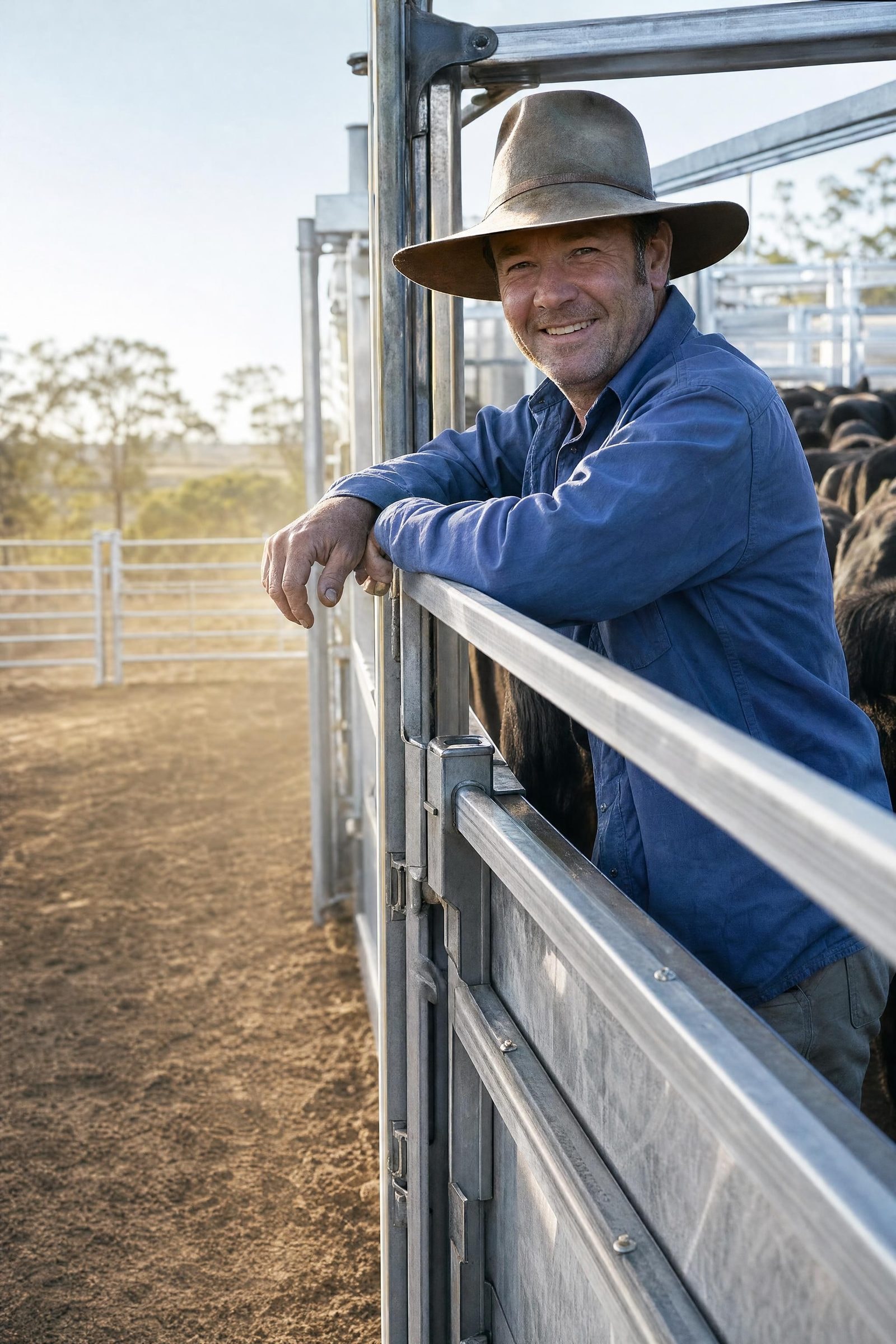
Good yards and handling gear save labour, injuries and time in every muster. We fund the whole setup rather than piecing it together over years.
 340 client reviews


One broker from your first call through to funding.
See which livestock equipment finance options fit your business.
Tell us what you are buying. A Lyft Money broker compares 48+ lenders and explains the rate, balloon, fees and total cost before you decide.
Access to 21+ livestock equipment finance lenders
Lenders on our panel that fund livestock equipment finance.





















At a glance
Livestock equipment finance: the numbers that matter.
- Typical price
- $15,000 – $500,000
- Terms
- Up to 84 months
- Indicative rates
- 6.7% – 14% p.a.
- Typical speed
- 2–5 business days
- Usual structure
- Agricultural equipment finance
- Useful life
- About 20 years
In plain English
What is livestock equipment finance?
Livestock equipment finance is funding for cattle and sheep handling infrastructure — crushes, yards, races, scales, dairy plant and feeders — secured against the equipment. Australian graziers and dairy farmers finance this gear to improve safety and throughput, and lenders commonly allow seasonal repayments.
Livestock handling equipment is bought for three reasons: safety, labour and data. A well-designed race and crush lets one or two people work stock that used to take a crew, dramatically reduces injury risk, and makes routine tasks like weighing, drenching and pregnancy testing fast enough to actually do on schedule. Electronic identification and scales then turn that handling into usable production data.
Because much of this gear lasts twenty years or more, financing it over five to seven years is comfortable and spreads the cost across the production it enables. The one thing to sort out early is what is portable and what is fixed. Panels, crushes, scales and feeders are equipment. Concrete, permanent yards and sheds are improvements to land, and are financed differently.
How lenders assess livestock equipment finance
Portable and free-standing equipment such as crushes, scales, portable yards and feed-out gear is straightforward to finance as equipment. Permanent yards fixed to land are harder to secure and are often funded through a secured business loan or against property, sometimes combined with the equipment on one facility. Dairy plant including vats, plate coolers and robotic units is well understood by agricultural lenders. Seasonal or monthly repayments are both available, and property-owning farmers typically access sharper pricing.
New or used
New yards and crushes are the norm because build quality determines safety and lifespan; used dairy plant and portable yards trade actively and are financeable.
Before you buy
- Design the yard flow around how cattle actually move before you buy panels; a cheap yard that fights the stock costs more in labour forever.
- Buy a crush with a good weighing platform and load bars — accurate weights drive better selling decisions.
- Separate portable equipment from fixed construction on your quote, since the two are financed differently.
Commonly financed
- Arrowquip Q-Catch crush
- Thompson Longhorn cattle handling
- Gallagher TWR scales and readers
- Proway sheep handling systems
- DeLaval and Lely dairy plant



A clear next step
How to finance a livestock equipment.
Our AI helps check lender fit across 48+ lenders. Your broker reviews the options and explains what they mean for you.
- 01
Machine and calendar
What you are buying, and when income actually lands across your production cycle.
- 02
Build the schedule
Your broker sets annual, seasonal or monthly repayments and any deferred start with lenders that support them.
- 03
Settle before the season
The financier pays the dealer or seller so the machine is on farm when it is needed.
- ABN and property details
- Dealer invoice or auction contract
- Financials, or bank statements for low-doc applications
The lender makes the final credit decision. Available options depend on your business and the lender’s assessment.
Before you make a decision
Estimate your livestock equipment repayments.
Adjust the price, rate, term and balloon to see the repayment and the total cost over the term.
- Number of repayments
- 60
- Balloon at end of term
- $51,600
- Total interest (est.)
- $70,462
- Total repaid (est.)
- $328,462
This calculator is a guide only. It uses simplified assumptions, excludes fees and charges unless stated, and is not an offer or quote. Actual repayments are confirmed by the lender in its loan contract.
From Lyft Money clients
Clear advice.
People who stay in touch.
Rated 5.0 from 340 Google reviews across the types of finance we arrange. Read them on Google.
“keeping us informed every step of the way”
“He explained all the financing options clearly”
“helped out my business”
Ways to finance a livestock equipment
Key terms
What is livestock equipment finance?
Livestock equipment finance is funding for cattle and sheep handling gear, dairy plant and feeding equipment, secured against the equipment. Terms commonly run 48 to 84 months and seasonal repayments aligned to livestock sales are often available.
Can permanent yards be financed as equipment?
Generally not. Yards fixed permanently to land are treated as improvements to property rather than movable equipment, so they are usually funded through a secured business loan or against the farm property. Portable panels and free-standing crushes can be financed as equipment.
What livestock equipment can be financed?
Cattle yards and crushes, sheep handlers, weigh systems, feed mixers and wagons, silos, dairy plant, robotic milking systems, shearing equipment and livestock trailers are all financed as equipment, with terms up to seven years and repayments matched to livestock sales or milk income. Portable and fixed systems are both accepted.
Can I finance livestock equipment for a new farming business?
Yes. New farming businesses and succession arrangements are financed on the strength of the land, the farm plan and the family’s history, often with a deposit or a guarantee. Established farms with clean credit are usually approved on low documentation for modest equipment. Your broker knows which lenders back new rural businesses.
Can dairy plant and robotic milking systems be financed?
Yes. Rotary and herringbone dairies, robotic milking units, vat and cooling systems and effluent equipment are financed by agricultural lenders on terms of up to seven years and longer in some cases, with repayments matched to the milk cheque. Installation can usually be included when quoted by the supplier.
Can repayments be timed to livestock sales?
Yes. Seasonal, half-yearly and annual repayments are available so the equipment is paid for when cattle, lambs or wool are sold rather than monthly. Tell your broker when income arrives and the structure is built around it.
How do seasonal repayments work on farm equipment finance?
Seasonal repayments schedule the bulk of the annual repayment to land after harvest, sale of livestock or other income events, with smaller or no payments in the months when cash is going out. A cropping operation might make one or two large payments a year after grain is delivered, while a dairy might pay monthly. Lenders that specialise in agriculture offer annual, half-yearly, quarterly and stepped structures. Your broker builds the schedule around your calendar.
What farm equipment can be financed?
Tractors, headers and harvesters, seeders and planters, sprayers, balers and hay equipment, irrigation pivots and pumps, grain handling and storage, livestock handling and shearing equipment, dairy plant, orchard and viticulture machinery, farm vehicles, drones and precision agriculture technology. New equipment from dealers and used machinery from dealers, clearing sales and private sellers are all financed.
Can I finance used farm machinery from a clearing sale or private seller?
Yes. Used tractors, headers and implements hold value well and are financed routinely, including from clearing sales and private sales with a PPSR check and an inspection or valuation. Most lenders allow machinery to be 15 to 20 years old at the end of the term, longer than for vehicles. For a clearing sale, a pre-approval lets you bid knowing what you can settle.
Should I set a balloon on farm equipment finance?
Headers, tractors and self-propelled machinery hold value well, so a balloon of 20 to 40 per cent is common and keeps the annual repayment down, with the machine traded to clear the balloon at the end. Implements and irrigation infrastructure that stay on the farm for their full life suit a low or zero balloon. Your broker sets the balloon against the machine’s expected value and your replacement plan.
How do lenders assess a farming business for equipment finance?
Specialist agricultural lenders look at the enterprise as a whole: land owned or leased, the history of yields or livestock sales, forward contracts, existing debt and the equipment’s role in production. Established farming families with a track record are generally well regarded, and lenders understand that income arrives in lumps. Low-doc equipment finance is available for established operations within limits, and larger purchases use financials.
Can irrigation and on-farm infrastructure be financed?
Yes. Centre pivots, lateral movers, pumps, pipelines, grain silos, sheds, solar systems and water infrastructure can be financed, often over longer terms of up to seven years or more because they have long working lives. Because some of this becomes a fixture of the land, lenders may take it as part of a broader agribusiness facility rather than as standalone equipment. Your broker structures whichever suits.
Your business. Your decision.
See your options.
Know the costs.
Decide with confidence.
One broker to explain it. Clear numbers before you proceed.
No obligation to proceed.