
Technology
Security system finance from 48+ Australian lenders.
Cameras and access control are usually installed into the building, so the funding works differently to movable equipment. We structure it around your lease.
 340 client reviews


One broker from your first call through to funding.
See which security system finance options fit your business.
Tell us what you are buying. A Lyft Money broker compares 48+ lenders and explains the rate, balloon, fees and total cost before you decide.
Access to 31+ security system finance lenders
Lenders on our panel that fund security system finance.































At a glance
Security system finance: the numbers that matter.
- Typical price
- $4,000 – $150,000
- Terms
- Up to 60 months
- Indicative rates
- 8% – 18% p.a.
- Typical speed
- 2–5 business days
- Usual structure
- Technology finance
- Useful life
- About 8 years
In plain English
What is security system finance?
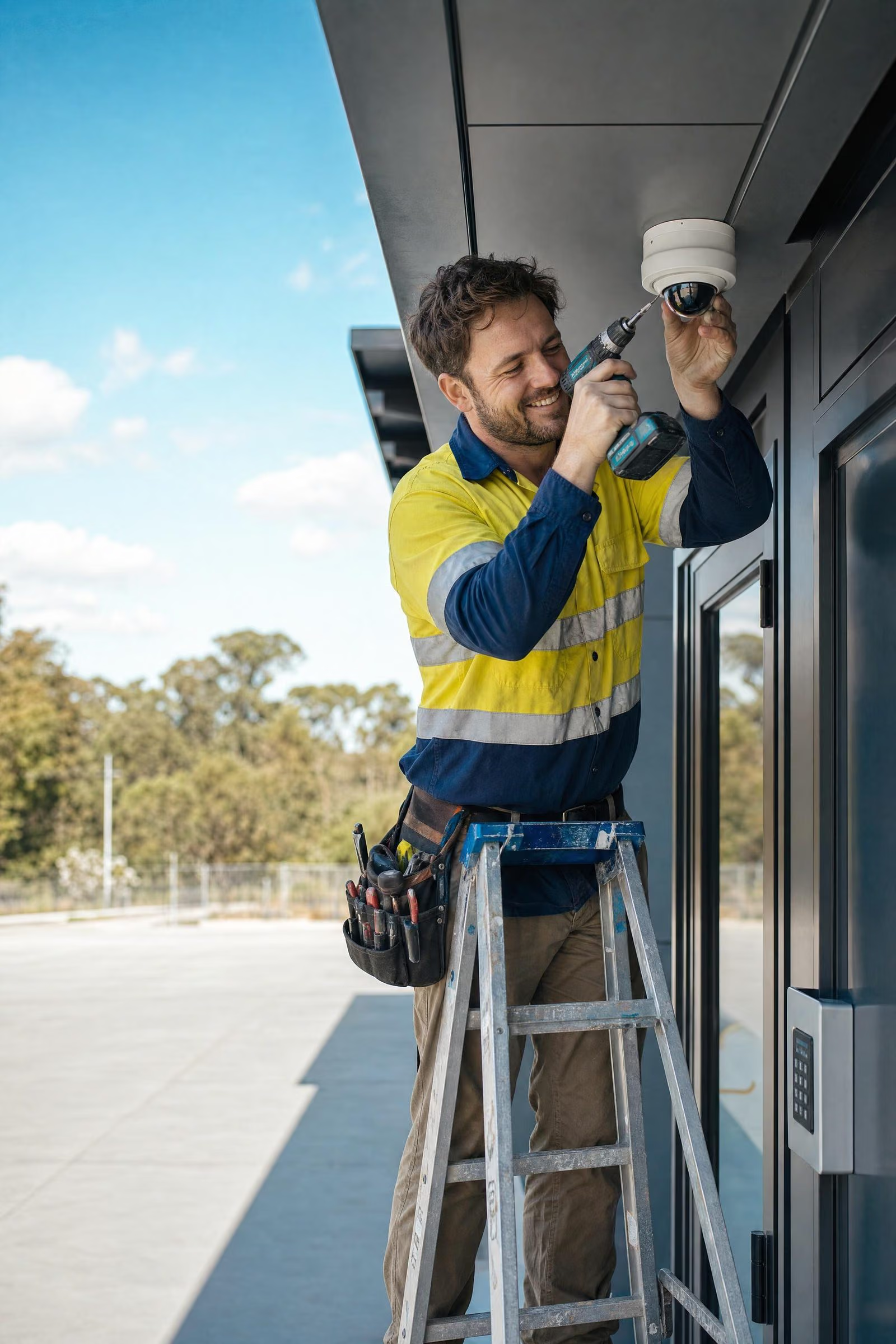
Security system finance is funding for CCTV, access control, alarms and monitoring infrastructure, usually structured over a short to medium term because much of the installation becomes fixed to the premises. Australian businesses commonly fund security as part of a wider fit-out or technology facility.
Security spending has shifted from deterrence to evidence and access management. Modern systems combine high-resolution cameras with cloud storage, analytics and card or mobile-based access control, and they increasingly sit on the same network as everything else in the business. That makes cyber security a real consideration: unpatched cameras are one of the more common entry points into a small business network.
On finance, the practical issue is that most of the installation ends up fixed to the building. Cabling, mounts and door hardware cannot be recovered, so lenders treat security more like fit-out than equipment and keep terms shorter. If you are fitting out premises anyway, folding the security package into that facility is usually simpler and cheaper than arranging it separately.
How lenders assess security system finance
Cameras, cabling and access control fixed to a building are hard for a lender to recover, so security systems are usually funded under technology finance or fit-out finance rather than as secured equipment. Terms are typically 24 to 60 months and, on leased premises, capped by the lease. Monitoring contracts are separate ongoing costs and are not usually financed. Where a security package forms part of a larger fit-out or equipment purchase, it can generally be rolled into the same facility.
New or used
New installations are standard because camera resolution, analytics and cyber security have moved quickly; used security hardware is rarely financed.
Before you buy
- Specify camera resolution and storage retention against what you actually need for evidence, not the maximum the installer offers.
- Check that the system is patchable and that the manufacturer still issues firmware updates — old cameras are a genuine network risk.
- Keep the monitoring contract separate and reviewable; it is an ongoing cost that outlasts the hardware.
Commonly financed
- Hikvision and Dahua CCTV
- Axis Communications network cameras
- Gallagher access control
- Inner Range Integriti systems
- Bosch alarm and detection systems

A clear next step
How to finance a security system.
Our AI helps check lender fit across 48+ lenders. Your broker reviews the options and explains what they mean for you.
- 01
Scope the project
Hardware, licences, implementation and training, and the realistic working life of each component.
- 02
Choose lender and structure
Your broker matches hardware-only or whole-project funders and compares chattel mortgage against a refresh lease.
- 03
Fund and deploy
The financier pays vendors, often in stages across a phased rollout.
- ID and ABN
- Vendor quotes itemising hardware, licences and services
- Financials or bank statements depending on the amount
The lender makes the final credit decision. Available options depend on your business and the lender’s assessment.
Before you make a decision
Estimate your security system repayments.
Adjust the price, rate, term and balloon to see the repayment and the total cost over the term.
- Number of repayments
- 60
- Balloon at end of term
- $15,400
- Total interest (est.)
- $28,540
- Total repaid (est.)
- $105,540
This calculator is a guide only. It uses simplified assumptions, excludes fees and charges unless stated, and is not an offer or quote. Actual repayments are confirmed by the lender in its loan contract.
From Lyft Money clients
Clear advice.
People who stay in touch.
Rated 5.0 from 340 Google reviews across the types of finance we arrange. Read them on Google.
“keeping us informed every step of the way”
“He explained all the financing options clearly”
“helped out my business”
Ways to finance a security system
Key terms
What is security system finance?
Security system finance is funding for CCTV, alarms and access control including installation, usually structured under technology or fit-out finance. Terms are typically 24 to 60 months and are generally capped by the remaining lease where premises are leased.
Can alarm monitoring be included in finance?
Generally no. Monitoring is an ongoing service contract with a monitoring provider rather than a capital cost, so it is usually paid monthly and kept separate from the finance. Some suppliers bundle it, in which case check the total cost and the contract length carefully.
What is the minimum amount for security system finance?
Technology lenders finance from around $3,000 to $5,000, so most commercial security installations qualify on their own. Smaller systems are often bundled with a fit-out or funded on a line of credit because fixed fees make a very small loan expensive. Your broker will tell you which is cheaper.
Should I rent or buy a security system?
Rental suits businesses that want monitoring, servicing and upgrades bundled into one monthly fee and no ownership at the end. A technology loan suits businesses that want to own the equipment and claim depreciation. Your broker compares both against the supplier’s quote.
Can a security system for multiple sites be financed as one contract?
Yes. Rollouts across stores, warehouses or clinics can be funded under one contract or a master facility with each site drawn down as it is installed, and franchise groups often set up a facility for franchisees. One application covers the whole program.
Can CCTV, alarms and access control be financed together?
Yes. Cameras, recorders, alarm panels, access control, intercoms, monitoring hardware and installation are financed as technology equipment or as part of a fit-out, usually on terms of three to five years. Monitoring subscriptions after the first year are paid as an operating cost.
When does an operating lease make more sense than owning?
An operating lease suits assets you want to use but not own — typically technology that dates quickly, or equipment you replace on a fixed cycle. The financier retains ownership and residual risk, you pay for use over the term and hand the asset back at the end, often with fair wear and tear and usage conditions attached. It keeps replacement predictable, but you build no equity, and exceeding the agreed usage can trigger additional charges.
What technology can be financed?
Servers, networking and storage, fleets of laptops and workstations, point-of-sale and payment systems, security cameras and access control, audiovisual and conferencing gear, 3D printers and specialist design hardware, commercial solar and battery systems, and the software and services that go with them, including ERP and practice management implementations. Hardware is financed as an asset; software and services are funded by lenders that specialise in intangibles.
Can software and implementation costs be financed?
Yes, with the right lender. Software licences, subscriptions paid upfront, implementation, data migration and training have no resale value, so mainstream asset lenders will not secure against them. A group of technology lenders fund these as a rental or a business loan, often bundled with the hardware in one agreement so the whole project is on a single monthly payment. The intangible portion is priced a little higher than the hardware. Your broker knows which lenders fund what.
Should I lease or buy IT equipment?
Lease when the equipment will be refreshed in three to four years, which is most laptops, workstations and networking, because a lease with a low residual keeps the monthly cost down and makes the refresh simple, with some lenders taking back and disposing of the old fleet. Buy with a chattel mortgage when the equipment has a long life, such as servers you will run for five years or solar systems that last decades. Your accountant advises on the tax outcome for each.
How long can technology be financed over?
Typically one to five years, matched to the useful life of the gear: two to three years for laptops and phones, three to five for servers, networking and audiovisual, and five to seven for commercial solar. Software implementations are usually funded over the length of the licence agreement. Matching the term to the refresh cycle avoids paying for equipment after it has been replaced.
Can I finance commercial solar and batteries?
Yes. Commercial solar and battery systems are financed by many lenders over five to seven years, often structured so the monthly repayment is close to or below the electricity saving. Government rebates and certificates reduce the amount financed. The system becomes a fixture of the building, so lenders look at the lease or ownership of the premises. Your broker compares lenders that specialise in energy assets.
Your business. Your decision.
See your options.
Know the costs.
Decide with confidence.
One broker to explain it. Clear numbers before you proceed.
No obligation to proceed.